Proven Retailer Solutions
TilePix Retailer Case Study
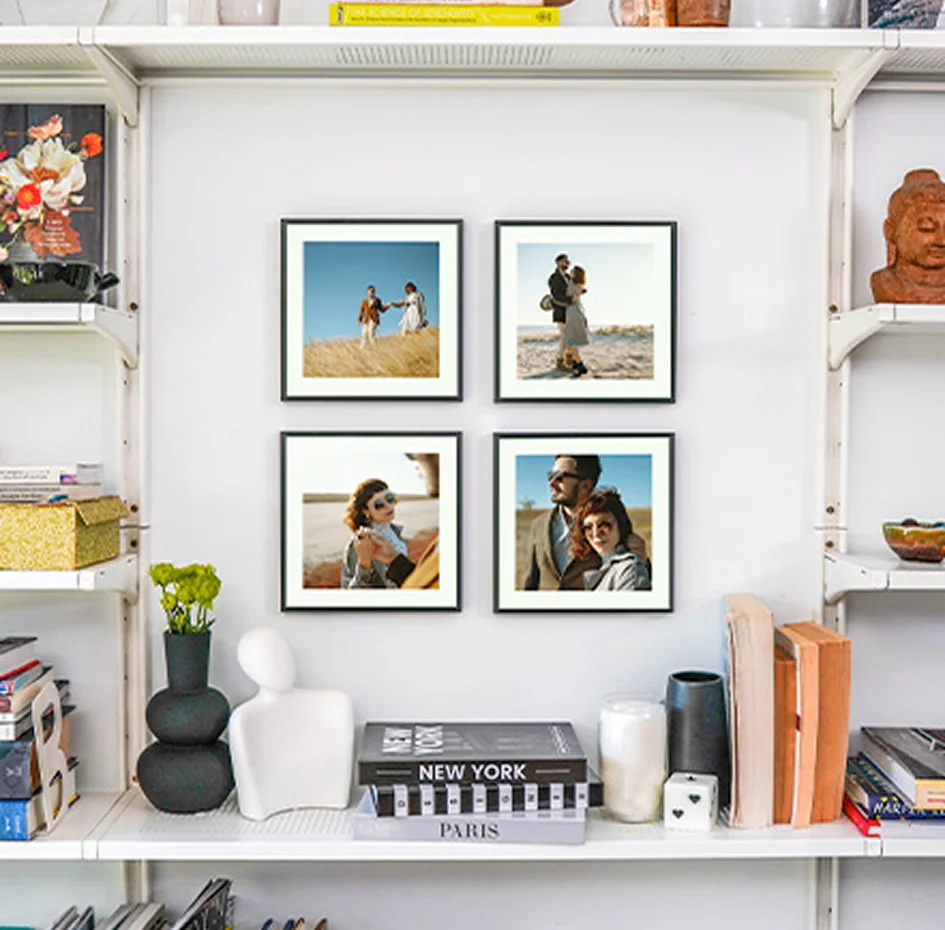
Problem: Hanging pictures shouldn’t be this hard. Nails punch permanent holes in your walls, adhesive strips fail and leave sticky residue, and getting frames perfectly aligned requires endless measuring with rulers and levels. What should be a simple decorating task becomes a frustrating, time-consuming ordeal that often damages your walls in the process.
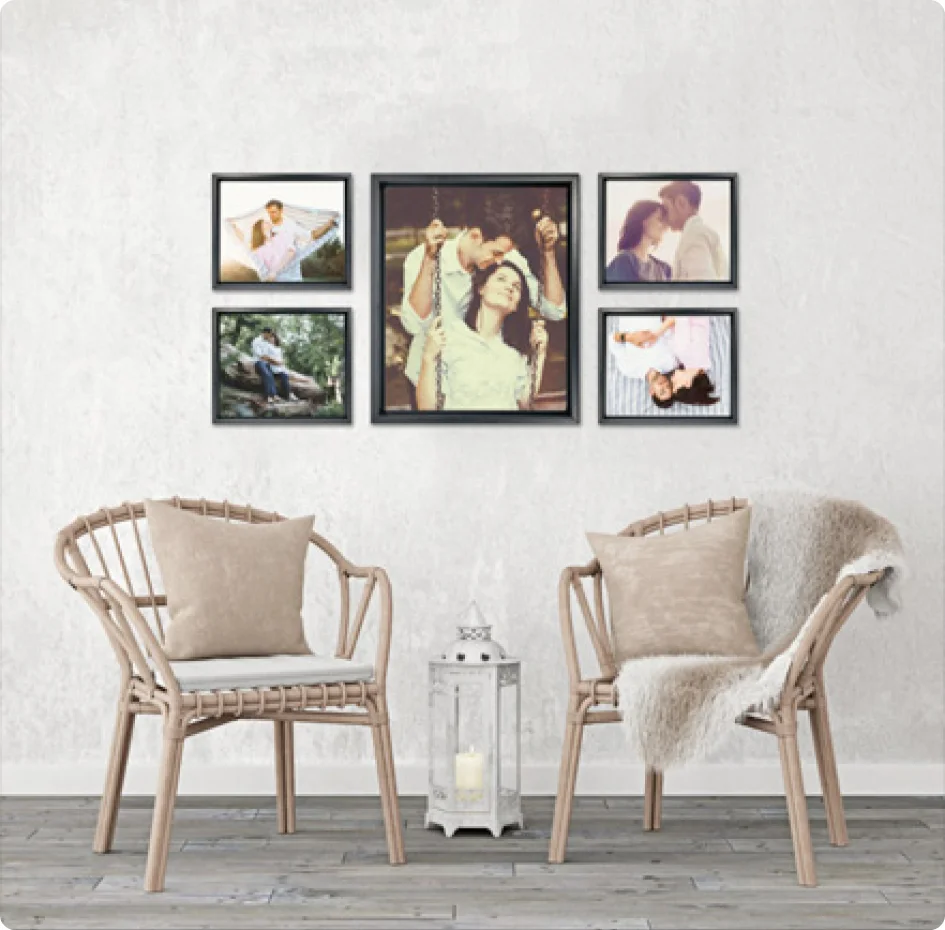
Solution: Tracer’s engineering team solved these challenges by creating TilePix, a patented No-Nails Magnetic Hanging system. Featuring an innovative magnetic pad, TilePix adheres securely to walls, peels off cleanly without damage, and allows frames to adjust up to an inch in any direction. TilePix Classic Frames, each holding an 8×8 print, are easily manufactured in-store, enabling retailers to offer a high-quality, user-friendly product with minimal associate training or errors.
Results: Since its 2022 launch, over 10 million TilePix frames have been sold. The line has grown from 8×8 resin frames to larger wood frames, glass panels, and skateboards. With average orders of 6-9 frames per customer, TilePix has redefined wall decor for consumers and created a profitable new revenue stream for retailers.
Snap2Canvas Retailer Case Study
Problem: In-store canvas assembly was a major headache for retailers. Faulty adhesive strips caused 30% of canvases to be discarded as waste, while the painfully slow 25–30 minute production time created bottlenecks. Worse yet, any mistake—a scratch, wrong image, or misalignment—meant starting over from scratch, leaving frustrated store associates dealing with an inefficient, error-prone process that wasted time and money.
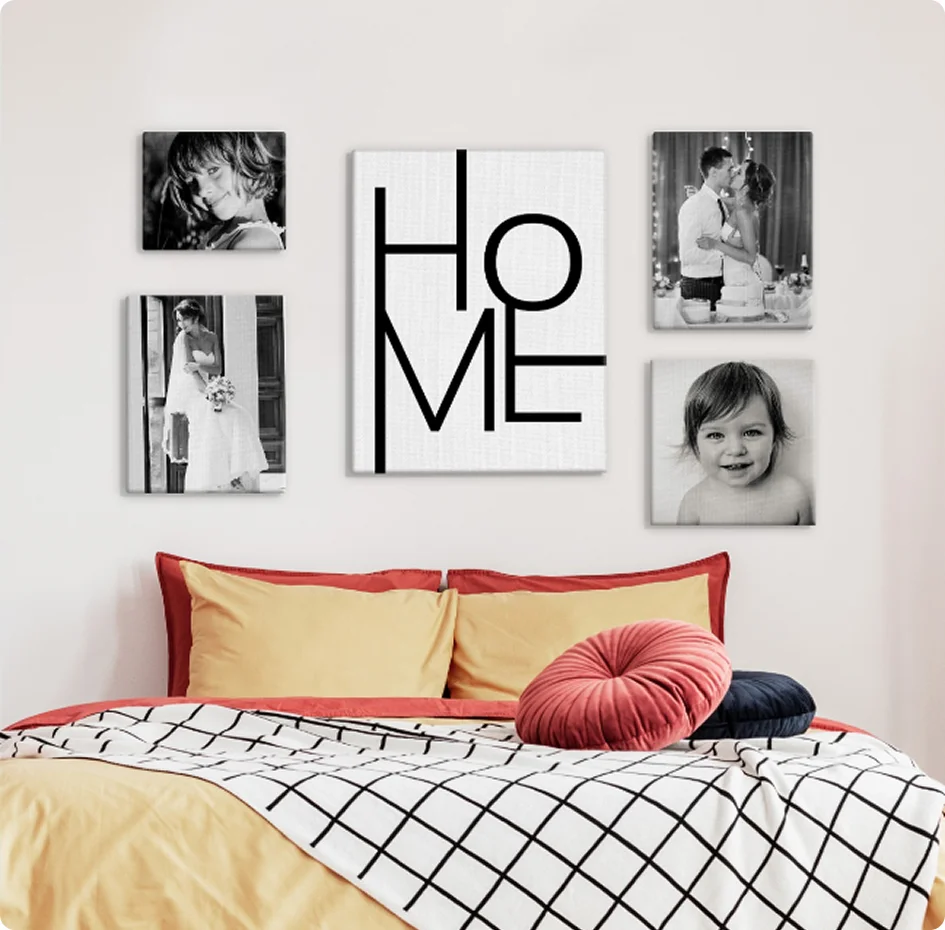
Solution: Tracer partnered with retailers, recognizing the store associate as the ultimate customer. Leveraging our engineering expertise, we developed Snap2Canvas, a patented press-fit system with a unique fixture and process. The design eliminates adhesives, staples, and waste while ensuring high-quality canvases that are 30% tighter and easy to produce across all sizes. And, waste is avoided entirely; unlike other systems, there is no need to start over if there are errors or scratches.
Training associates to make Snap2Canvas products is easy and the system is now used in 8,000 Walgreens stores, independent photo retailers, and other industries.
Over 10 million Snap2Canvas products have been made in-store! It’s Tracer’s creativity at work, solving complex retail challenges reliably in ways that deliver measurable business improvement.

Lenticular Case Study
Problem: Public artist Andrea Polli faced a unique challenge when Utah Public Art asked her to re-envision her groundbreaking first permanent public art commission. “E Oculus,” installed in 2011 at Utah’s Eccles School of Business, featured LED panels in the Great Salt Lake’s shape responding to real-time stock market data. After 13 years, the technology reached its lifespan, and Polli wanted greater artistic complexity without data dependencies or technological obsolescence.
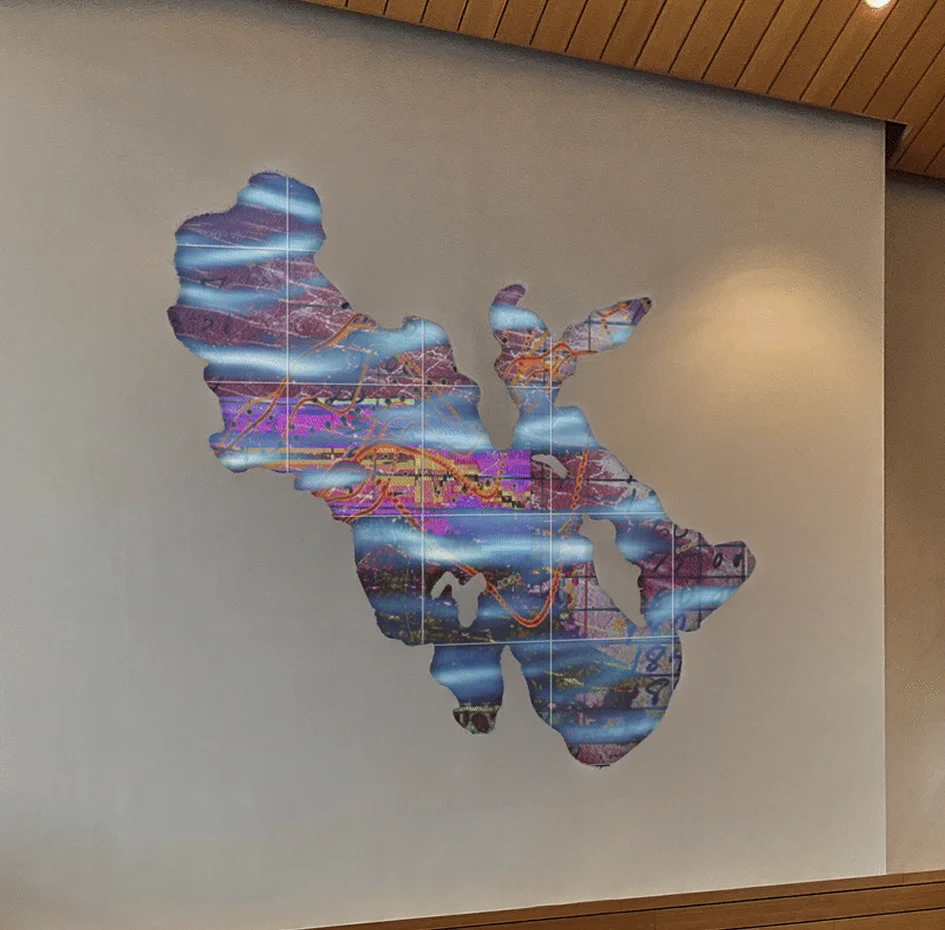
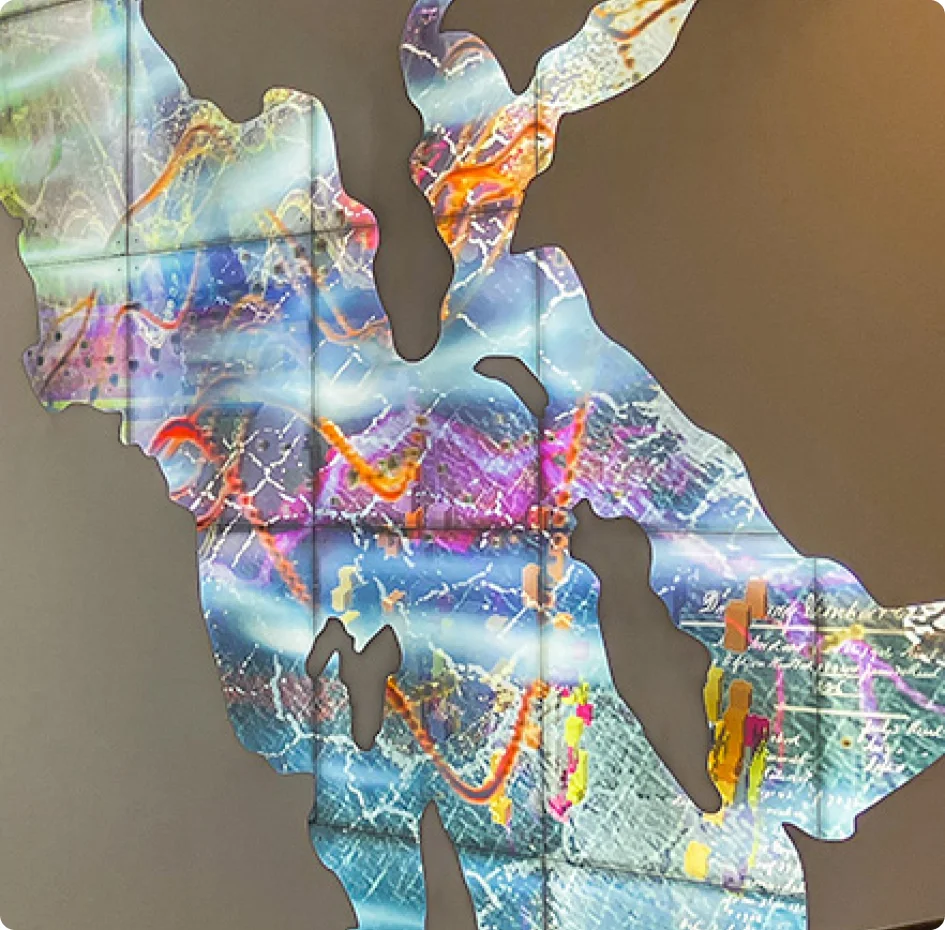
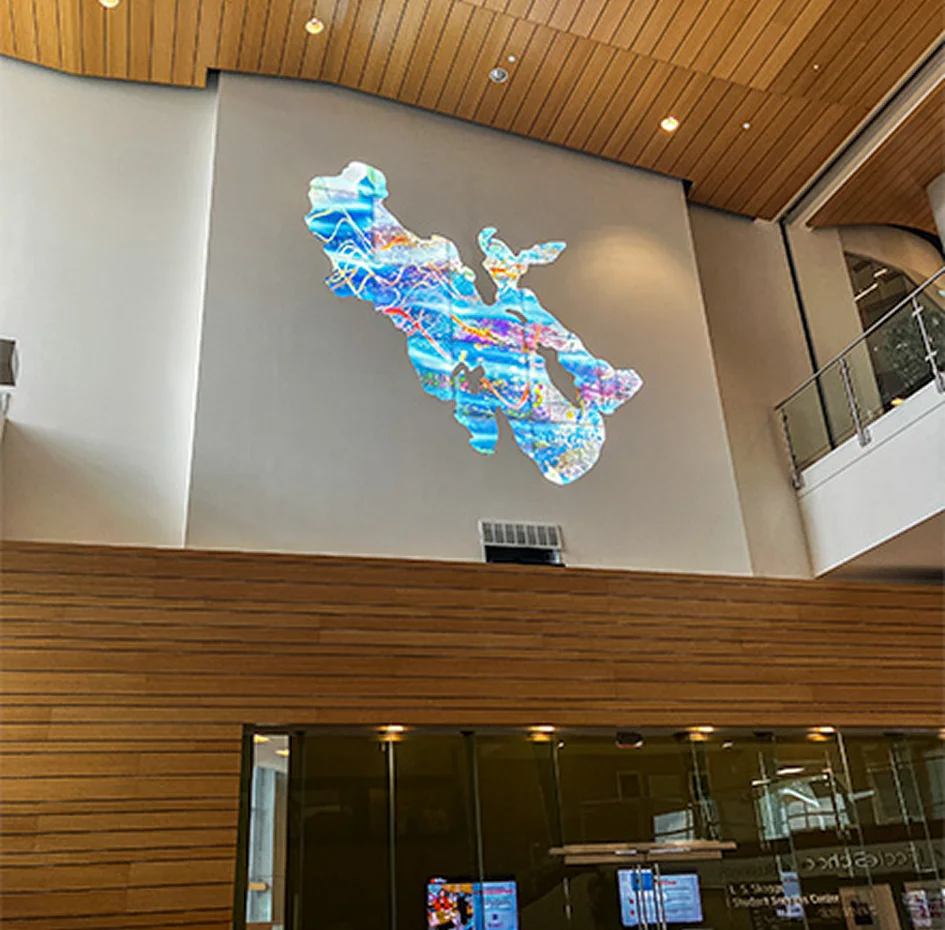
Solution: Polli worked with Tracer to create “Three Worlds,” a permanent lenticular installation inspired by M.C. Escher’s print. Tracer’s expertise overcame significant challenges. To create the complex 5-flip effect, Tracer processed hundreds of Photoshop layers, creating preview animations and refining depth planes embodying Polli’s framework: sky reflected on the lake, the lake surface, floating clouds and visual representations of economic themes. Tracer then seamlessly tiled 16 panels within custom fabricated aluminum light boxes and assembled behind the shape of the Great Salt Lake. This collaboration and its 15 ft x 15 ft installation on the second floor of a large atrium challenged our capabilities in the most exciting way.
Results: “Three Worlds” represents one of Tracer’s most creative collaborations, demonstrating our technical expertise while showcasing innovative public art. Unlike the original’s data limitations, our lenticular solution enabled deeper artistic possibilities increasing depth and color—and enabling viewers to experience all layers simultaneously, while walking through their spacious lobby. This project demonstrates how lenticular technology enables complex storytelling by allowing artists to achieve greater creative control.